What an overlay actually is
An overlay places new asphalt over the existing surface, bonded to it. The existing pavement becomes part of the structure. That only works if the existing pavement is still structurally sound.
What replacement actually is
Replacement removes the existing surface, and usually rebuilds some or all of the base beneath it, before paving. You are rebuilding the structure rather than adding to it.
Signs an overlay is reasonable
- Cracking is limited and not interconnected
- The surface does not move or flex underfoot or under a vehicle
- Water is not pumping up through cracks after rain
- Drainage broadly works, with no long standing water
- Failures are isolated and can be repaired to full depth first
- Curb, drain and threshold heights can accept added thickness, or milling can offset it
Signs you need replacement
- Interconnected cracking across large areas
- The surface flexes or moves under load
- Fine material pumping up through cracks, which means water in the base
- Repeated patches in the same locations failing again
- Potholes forming across many areas rather than a few
- Standing water that no surface treatment can resolve
Where milling changes the answer
If the base is sound but heights cannot move, milling the existing surface before placing new asphalt keeps curbs, drains and thresholds where they are. That makes resurfacing possible on properties where a straight overlay would cause drainage or access problems.
The cost trap worth avoiding
An overlay on a failed base is the most expensive option available, because the same cracking pattern comes back and the work gets paid for twice. If a contractor is quoting an overlay on a surface that is pumping water and moving under load, ask how the base was assessed.
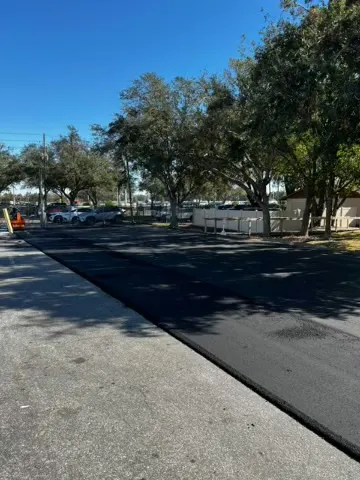
Roadway after an asphalt overlay
overlay
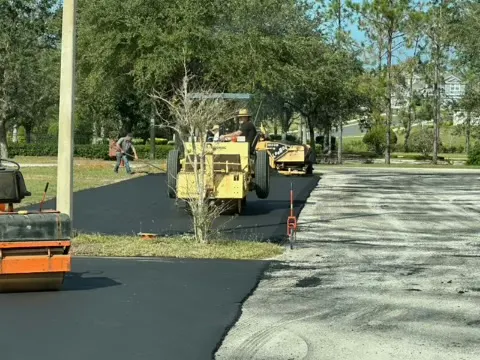
Roller and paver working a wide paving run