Up front cost
Asphalt is generally the lower initial cost for the same area. Concrete generally costs more to install. The gap varies with site conditions and thickness, which is why both are quoted per job rather than off a chart.
How each one behaves in Florida heat
Asphalt is flexible. In sustained heat it softens at the surface, which is why sharp turning, trailer jacks and narrow-point loads can leave marks on a new drive during summer. That flexibility is also why it tolerates minor ground movement without cracking straight through.
Concrete is rigid. It does not soften, and it stays lighter and cooler underfoot. Rigidity means it handles movement by cracking, and it relies on joints and reinforcement to control where.
Repairability
This is where asphalt has a clear practical advantage. A failed area can be cut out and replaced, and the repair blends into the surface over time. Concrete repairs are much harder to make invisible, and a cracked slab section usually means replacing the section.
Maintenance
Asphalt wants periodic attention: keeping cracks sealed so water stays out, and sealcoating on a sound surface. Concrete needs less routine work, though it stains more visibly and may want sealing for that reason.
Lifespan
Both can last a long time when the base is right and drainage works. Concrete typically has the longer nominal life. In practice we see the base and the water deciding the outcome more often than the surface material does.
Which one fits your situation
- Lower initial cost and easy future repairs point to asphalt
- Long single drive on acreage points to asphalt on cost per square foot
- A lighter, cooler surface and a specific decorative finish point to concrete
- Ground that moves slightly is generally kinder to asphalt
- Either way, the base and the drainage matter more than the choice of material
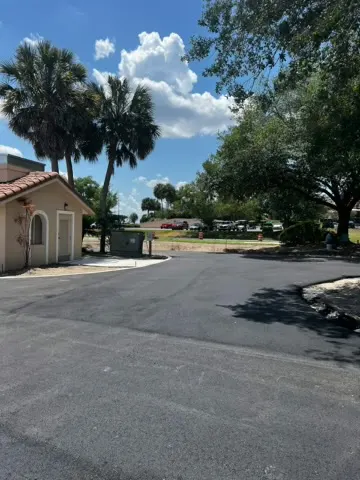
Fresh asphalt parking area edged by palms
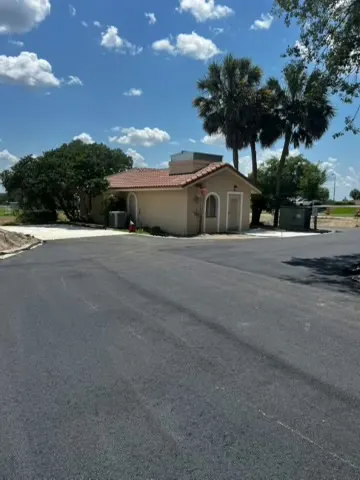
New asphalt drive past a small building
paving