Asphalt Overlay Contractor in Central Florida
A fresh layer, only where the base has held.
An overlay places a new layer of asphalt directly over existing pavement that has been verified sound and prepared for bonding.
The distinction we draw on a job is practical. An overlay leaves the existing surface in place and adds height. Resurfacing may include milling the existing surface first so finished heights stay where they are. Which one fits depends on curb heights, thresholds, drainage and how much of the old surface is worth keeping.
Whichever term is used, the deciding question is the same: is the base sound. If it is not, neither treatment will hold.
An overlay is a narrower job than full resurfacing. It suits a surface that is worn, oxidized or lightly cracked but still carrying traffic without soft spots or widespread failure. Where those failures exist, the honest answer is repair first, mill and resurface, or replace.
Asphalt Overlays project scope
What an overlay involves
- Verification that the existing base and surface can carry a bonded overlay
- Full depth repair of failed areas first
- Cleaning and tack coat for bond
- New asphalt lift placed and compacted
- Height and tie-in checks at curbs, drains and thresholds
Asphalt Overlays assessment
Common pavement and site concerns
Height cannot change
Where curbs, drains or thresholds fix the finished height, milling first is required and a straight overlay is out.
Reflective cracking
Cracks in the old surface tend to come through a thin overlay. Treatment depends on crack width, movement and lift thickness.
Soft spots and alligator cracking
These usually mean the base has failed. Those areas need full depth repair before any overlay, or the lot may be better replaced.
Drainage already poor
Adding height without fixing ponding can move water to the wrong place. Grades are checked before an overlay is recommended.
Asphalt Overlays project planning
How the job takes shape
- 1
Verify the candidate
Assessment of base, cracking and heights.
- 2
Repair
Full depth repair where the surface has failed.
- 3
Tack and place
Bond coat, then the new lift, then compaction.
Discuss the site condition, drainage, access and intended use when requesting an estimate. Ask for a written scope so you can compare the proposed work.
Tri-State asphalt overlays photos
Photos from our work
Explore our paving, grading and pavement maintenance work.
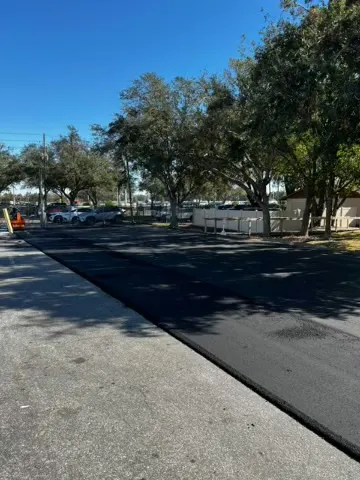
Roadway after an asphalt overlay
overlay
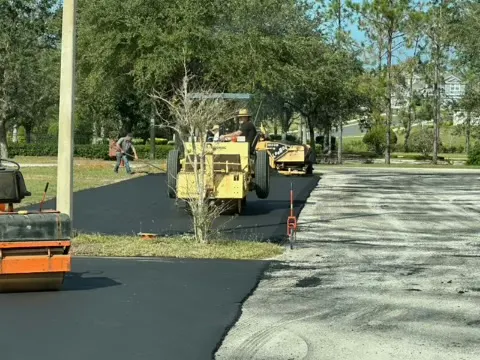
Roller and paver working a wide paving run
Commercial and residential asphalt overlays
Who we work with
- Owners with a structurally sound but worn surface
- Property managers comparing overlay, resurfacing and replacement
- HOAs and private road groups with an aging but stable road
- Businesses whose lot looks tired but still drains and carries traffic
Common questions
- Is an overlay cheaper than replacement?
- Usually yes, when the base is sound. When it is not, an overlay is the more expensive option because it gets paid for twice.
- What is the difference between an overlay and resurfacing?
- An overlay adds a new layer over the existing surface. Resurfacing is a broader term that can include milling off the old surface first so heights stay the same. Which applies depends on curbs, drains and thresholds.
- Will cracks come back through an overlay?
- Some can, especially larger moving cracks. Repairing failed areas first and choosing the right approach reduces that risk, but no one can promise cracks will never return.
- How do I know if my lot can be overlaid?
- We look at cracking patterns, soft spots, drainage and finished heights. Our overlay vs replacement guide explains the same factors.
Asphalt paving and grading estimates in Central Florida
Ready for a written estimate?
Tell us about the property and the work you need. Discuss the site condition, access and proposed scope for your estimate.